"Faithful are the wounds of a friend, but deceitful are the kisses of an enemy."
Proverbs 27:6The Tension We Feel
Let's start with honesty: this is uncomfortable. If you've wrestled with whether Christians should speak up about Israel's actions, you're not alone. The tension is real:
- It feels disloyal. "If I critique Israel, am I betraying God's people?"
- It feels risky. "Will people call me antisemitic?"
- It feels presumptuous. "Who am I to judge another nation?"
These concerns are understandable. We should proceed with care, humility, and love.
But before we go further, let's clarify what we're actually doing here. We are not claiming authority to condemn anyone's eternal destiny; that belongs to God alone. We are comparing actions to God's already-revealed standards. That's not "judging" in the way Jesus forbade; it's discernment, which Scripture commands.
And here's the thing: the prophets felt these tensions too. Jeremiah wept. Hosea agonized. Amos was just a shepherd who didn't ask for this job. And they spoke anyway. Their love for Israel compelled them to speak.
Pause and Reflect
If your own country committed injustice, would you stay silent? Would that silence be faithfulness or complicity?
In Christ, We're Family, Not Outsiders
One common objection: "We're Gentiles and they're Jews, God's chosen people. It's not our place to critique them."
This comes from a good place, a desire to honor God's election and avoid arrogance. But Scripture points in a different direction.
"There is neither Jew nor Gentile, neither slave nor free, nor is there male and female, for you are all one in Christ Jesus."
Galatians 3:28 (NIV)"For he himself is our peace, who has made the two groups one and has destroyed the barrier, the dividing wall of hostility..."
Ephesians 2:14 (NIV)Paul's point: ethnicity no longer determines who belongs to God's covenant people, or who may speak truth within that family. If you're in Christ, you're not an outsider. You're part of the household.
Consider the Logic:
If Gentile Christians have no standing to critique Israel because "we're outsiders," then we also have no standing to defend Israel. You can't have it both ways. Either we have moral standing to speak (both support and critique) or we don't.
In fact, Paul describes a purpose for Gentile inclusion that is the opposite of silence:
"Did they stumble so as to fall beyond recovery? Not at all! Rather, because of their transgression, salvation has come to the Gentiles to make Israel envious."
Romans 11:11 (NIV)Paul says Gentile faith is meant to provoke Israel to jealousy and ultimately lead to mercy. Gentiles function as a mirror, not just an audience. The "not our place" idea doesn't fit Paul's framework. He envisions Gentiles playing an active role in God's redemptive purposes for Israel.
We speak as family, not as outsiders. And family tells the truth.
✓ Where We Are
In Christ, the Jew/Gentile wall is torn down. We're not outsiders; we're family. The same standing that lets us defend Israel lets us ask hard questions.
Coming next: What did the prophets and Jesus actually model?
The Prophets Spoke Hard Truths
The biblical prophets loved Israel deeply, yet they didn't hesitate to speak hard truths when Israel violated God's standards.
Amos: Naming Injustice
"They sell the innocent for silver, and the needy for a pair of sandals. They trample on the heads of the poor as on the dust of the ground and deny justice to the oppressed."
Amos 2:6-7Isaiah: Calling Out Hypocrisy
"Stop bringing meaningless offerings! Your incense is detestable to me... Your hands are full of blood! Learn to do right; seek justice. Defend the oppressed."
Isaiah 1:13-17Jeremiah: Warning of Judgment
"This is what the LORD says: Do what is just and right. Rescue from the hand of the oppressor the one who has been robbed. Do no wrong or violence to the foreigner, the fatherless or the widow."
Jeremiah 22:3Key Insight: The prophets held Israel to higher standards precisely because of their covenant relationship. "You only have I chosen of all the families of the earth; therefore I will punish you for all your sins" (Amos 3:2).
Jesus: Grief and Truth Together
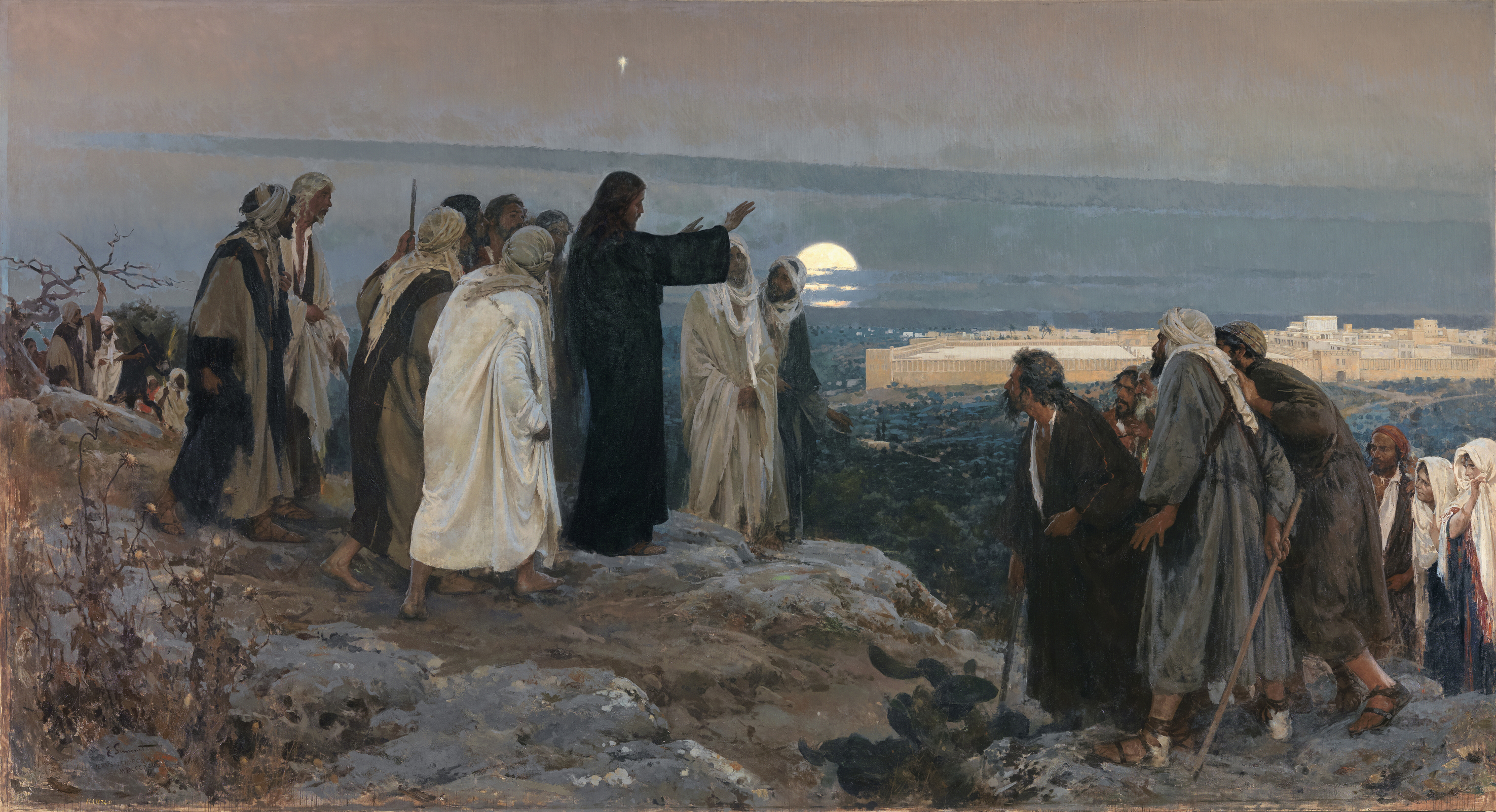
Jesus loved Jerusalem. He wept over it. Yet His love didn't prevent Him from speaking painful truth. This is the model we seek to follow.
"As he approached Jerusalem and saw the city, he wept over it and said, 'If you, even you, had only known on this day what would bring you peace, but now it is hidden from your eyes.'"
Luke 19:41-42 (NIV)"Jerusalem, Jerusalem, you who kill the prophets and stone those sent to you, how often I have longed to gather your children together, as a hen gathers her chicks under her wings, and you were not willing."
Matthew 23:37"Woe to you, teachers of the law and Pharisees, you hypocrites! You shut the door of the kingdom of heaven in people's faces..."
Matthew 23:13This is strong language. Jesus didn't soft-pedal His critique because the Pharisees were part of Israel. He loved them enough to tell them the truth.
Silence Is Not Innocence
The "leave it to God" position sounds spiritual, but Scripture treats passive silence as participation in injustice.
"On the day you stood aloof while strangers carried off his wealth and foreigners entered his gates and cast lots for Jerusalem, you were like one of them."
Obadiah 1:11 (NIV)Edom was judged not for attacking Israel, but for standing by and doing nothing. In God's moral calculus, passive observation of evil is treated as participation. "You were like one of them."
"Rescue those being led away to death; hold back those staggering toward slaughter. If you say, 'But we knew nothing about this,' does not he who weighs the heart perceive it?"
Proverbs 24:11-12 (NIV)"If anyone, then, knows the good they ought to do and doesn't do it, it is sin for them."
James 4:17 (NIV)Paul makes the command even more direct:
"Have nothing to do with the fruitless deeds of darkness, but rather expose them."
Ephesians 5:11 (NIV)✓ Where We Are
Scripture is clear: silence in the face of injustice is itself a moral choice. Obadiah, Proverbs, and James all teach the same thing.
Coming next: What does faithful speech actually look like in practice?
Putting This into Practice
If we have standing to speak, and silence isn't an option, then what does faithful speech look like?
"Faithful are the wounds of a friend, but the kisses of an enemy are deceitful."
Proverbs 27:6"Speaking the truth in love, we will grow to become in every respect the mature body of him who is the head, that is, Christ."
Ephesians 4:15Truth and love aren't opposites; they're partners. Here's what that looks like practically:
1. Speak Without Hatred
Critique grounded in biblical justice isn't hatred. It's consistency. We can name injustice while still praying for Israelis, caring for Jewish neighbors, and working toward peace.
A Critical Distinction:
Critiquing a nation's policies is not the same as hating its people. We must distinguish between the government of Israel, the citizens of Israel, Jewish people worldwide, and biblical Israel. Speaking truth about governmental injustice is not antisemitism. It's consistency.
2. Follow the Prophets' Example
The prophets didn't stay silent when Israel oppressed the vulnerable. Neither should we:
- Name specific injustices (as the prophets did)
- Call for repentance and reform
- Advocate for the oppressed
- Grieve over sin while hoping for restoration
3. Apply Consistent Standards
We don't give any nation a blank check: not our own, not our allies, not Israel.
4. Speak with Humility
Paul warns against arrogance toward Israel (Romans 11:18-20). Humility governs how we speak, not whether we speak. It means no gloating, no ethnic superiority, no hatred, and genuine prayer for restoration.
Where We Might Be Wrong:
We could be wrong about the tone. If something here comes across as arrogant rather than humble, we genuinely want to hear it. We're trying to follow Jesus' model (grief alongside truth) but we're imperfect followers.
5. Addressing Common Objections
You may be thinking: "Just give it to God. If God wanted things to change, He would change them. Our job is to pray, not get involved."
God's sovereignty is not a permission slip for passivity. Scripture repeatedly shows God using people's obedience as the means by which He accomplishes His will. The biblical pattern is prayer and action:
"We prayed to our God and posted a guard day and night to meet this threat."
Nehemiah 4:9 (NIV)Nehemiah didn't choose between prayer and action. He did both. That's the biblical pattern throughout Scripture.
"But Romans 13 says to submit to governing authorities" Does criticism equal rebellion?
Romans 13 forbids anarchy and vigilante rebellion. It does not forbid moral discernment, prophetic witness, or calling rulers back to the purpose God gives government: to punish wrongdoing and commend good (Romans 13:3-4).
If a government rewards evil or harms the innocent, Christians are allowed (and sometimes required) to say, "That is not what God calls good."
And Scripture gives a clear limit: when human authority conflicts with God's commands, God wins.
"We must obey God rather than human beings!"
Acts 5:29 (NIV)"Submit" in Romans 13 cannot mean "endorse every policy" or "be silent about injustice."
"If you criticize Israel, you're helping Hamas" A false binary
Condemning terrorism and defending civilians are not opposites. Christians can say "Hamas is evil" and say "God's standards still protect the innocent."
Telling the truth about moral limits is not "taking the enemy's side." It is refusing to let evil set the terms of what Christians are allowed to call good.
The prophets didn't stop critiquing Israel just because Israel had enemies. Neither should we.
What We're Confident About, and Where We're Still Learning
We're Confident
- Biblical love includes accountability. The prophets and Jesus Himself confronted Israel when they violated God's standards.
- In Christ, the wall is torn down. We speak as family, not outsiders.
- Silence is not a neutral act. Scripture treats standing by as participation.
- Consistency matters. We apply the same standards to all nations.
We're Still Learning
- Exactly how to do this well. What does prophetic speech look like in the 21st century?
- How to grieve while we speak. Jesus wept. Do we?
The question we'd leave with you: If faithful Christians applied the same scrutiny to Israel that we apply to other nations, what would that look like? Not hatred. Not boycotts necessarily. But simply... consistency?
Questions for Reflection
- How do you distinguish between antisemitism and critique of governmental policy?
- What do you think Jesus would say about the current situation?
- How can we speak truth while maintaining love for all people involved?
- What does "seeking peace" actually require of us?