"History doesn't determine truth, but understanding history helps us see which interpretations are genuinely ancient and which are modern developments."
A Timeline
The dominant view among church fathers, medieval theologians, and Reformers: Israel's promises find fulfillment in Christ and His Church
John Nelson Darby develops a new prophetic framework in England
Embeds dispensationalism in study notes, spreading it widely in America
Appears to "confirm" dispensationalist predictions
Leads to explosion of Christian Zionist teaching
The Late Great Planet Earth and Left Behind bring it to millions
A Necessary Clarification
Before we continue, let's be clear about what we're not saying:
We're not arguing that dispensationalism is wrong because it's recent. Newness doesn't determine truth. The Reformers recovered justification by faith after centuries of distortion. Newness didn't make them wrong.
We're not saying dispensationalists aren't sincere believers. Many wonderful Bible teachers hold these views. People who have helped millions grow in Christ. We're not questioning anyone's faith or love for Scripture.
We ARE saying: This is one way to read Scripture, not the way. Christians read the Bible differently for 1,800 years before Darby. That doesn't make Darby wrong. But it should open us to looking at Scripture afresh.
The Early Church (100–500 AD)
The earliest Christian writers after the apostles read Israel's promises through a Christ-centered lens. These include Justin Martyr, Irenaeus, Origen, and Augustine.
What They Taught
- Jesus is the true Israel, the faithful Son where the nation failed
- The Church (made up of Jews and Gentiles who believe) is the continuation of God's covenant people
- Old Testament prophecies about restoration find their fulfillment in Christ and His kingdom
- The "land" promises point beyond geography to the new creation
Why this matters: For the first four centuries (the era closest to the apostles), Christians read Scripture through a fulfillment lens. They didn't use a two-peoples-with-two-destinies framework.
The Reformers and Beyond (1500–1800)
The Protestant Reformers (Luther, Calvin, Zwingli, and their heirs) continued the fulfillment reading of Scripture.
What They Generally Taught
- The Church is the true Israel, grafted into the covenant by faith
- Old Testament promises about restoration are fulfilled spiritually in the gospel
- Christ is the key to interpreting all of Scripture
Major Figures
John Calvin read prophecies about Israel's restoration as referring to the Church. John Wesley held similar views. He saw the New Testament as the key to reading the Old. Charles Spurgeon is sometimes claimed by modern Christian Zionists. But his views were nuanced: he hoped for Jewish conversion while keeping a fulfillment framework.
Why this matters: The dominant Protestant tradition for 300+ years read Israel's promises as fulfilled in Christ. The framework many assume is "what the Bible clearly teaches" would have been unfamiliar to Calvin, Wesley, or Spurgeon.
John Nelson Darby and Dispensationalism (1830s)

In the 1830s, an Anglo-Irish clergyman named John Nelson Darby developed a new system for reading the Bible. It would eventually reshape American evangelicalism.
What Darby Taught
- God has two distinct peoples with two distinct programs: Israel and the Church
- Israel's promises remain unfulfilled and will be literally fulfilled in the future
- The Church age is a distinct period in God's plan before He resumes His work with Israel
- History is divided into distinct "dispensations" with different arrangements for each
What Was New
- The sharp distinction between Israel and the Church as separate peoples
- The idea that Old Testament promises to Israel must be fulfilled literally and nationally
- The "rapture" of the Church before a tribulation period
- A detailed prophetic timeline leading to Christ's return
Darby's influence: Through speaking tours and writings, Darby spread his ideas among evangelical communities in Britain and America. But the real explosion came through one particular book...
Comparing the Views
To be clear about the contrast, here's how these two views read Scripture differently:
| Fulfillment/Covenant View | Dispensationalist View |
|---|---|
| Christ is the true Israel | Israel and the Church are separate peoples |
| The Church is Abraham's seed through faith | The Church is distinct from Israel |
| Land promises point to new creation | Land promises must be literally fulfilled |
| OT prophecies fulfilled in Christ | OT prophecies await future literal fulfillment |
| One people of God (Jews + Gentiles in Christ) | Two peoples with two programs |
We believe the fulfillment view is more consistent with how the apostles themselves interpreted the Old Testament, as we explored in our examination of Genesis 12:3 and related passages.
A Word to Dispensationalist Readers
If you hold dispensationalist views, we want to speak to you directly:
We're not questioning your faith. Many of the most godly Christians we know hold these views. Many wonderful pastors and teachers work from this framework.
We're not saying you don't love the Bible. Dispensationalists often have deep reverence for Scripture. That's not in question.
We ARE asking: Is this framework required by Scripture? Or is it one way to read Scripture? Could faithful Christians read these texts differently, as Christians did for 1,800 years?
Our Invitation:
Examine the passages we've discussed. Consider whether the apostolic reading might be faithful to the text. You may still conclude that dispensationalism is correct, and we can remain brothers and sisters in Christ either way. But we hope you'll be open to the idea that faithful Christians can disagree on this.
The Scofield Reference Bible (1909)
No single publication did more to spread dispensationalist ideas than the Scofield Reference Bible.
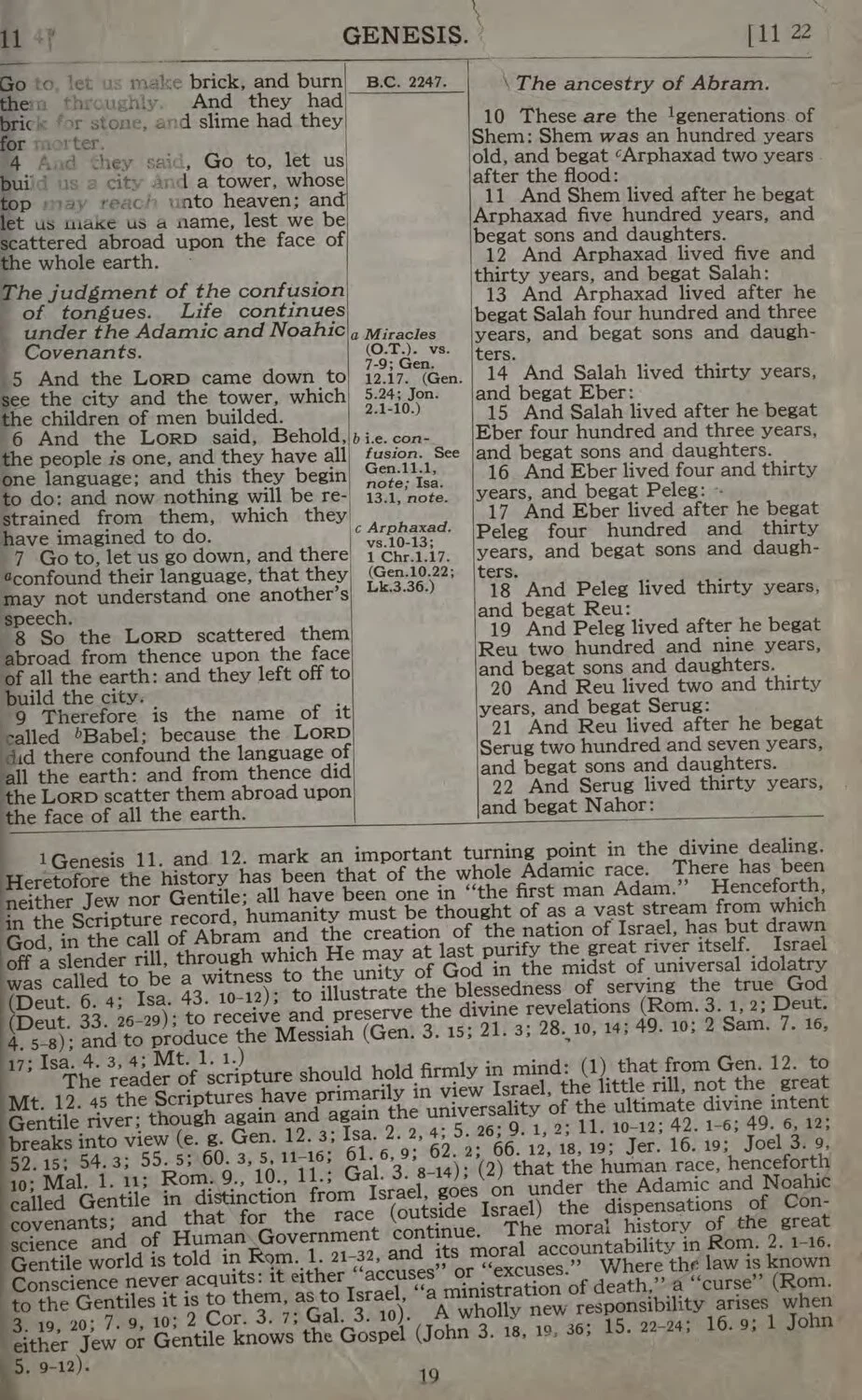
What it was: Published in 1909 by Cyrus I. Scofield, this wasn't a new translation. It was the King James Version with extensive study notes printed right on the page, next to the biblical text.
Why It Mattered
- Notes appeared alongside Scripture. The study notes were printed in the same font, on the same page, right next to the verses. Over time, many readers blurred the line between notes and text.
- It presented one view as the view. Scofield didn't frame his notes as "one way to read this." He presented them as simply what the text meant.
- It became the evangelical standard. For decades, this was the Bible for American evangelicals. Pastors trained with it. Bible studies used it. It shaped how millions learned to read Scripture.
- It embedded a framework invisibly. Christians raised on the Scofield Bible often didn't realize they had learned a specific interpretive system. They thought they were just reading "what the Bible says."
The result: By the mid-20th century, dispensationalism had moved from a novel view to "what evangelicals believe." Many Christians today hold these views without knowing where they came from. They assume this is simply what the Bible teaches, and what the Church has always taught.
Political Zionism: A Parallel Movement
While dispensationalism spread in Christian circles, a separate movement was emerging in Jewish communities.
What it was: Political Zionism called for a Jewish homeland. The movement was led mostly by secular Jews. Its founder, Theodor Herzl, published The Jewish State in 1896. He proposed a political solution to European antisemitism.
Key Point: Early Zionism was a secular nationalist movement, not a religious one. Many religious Jews initially opposed it. They believed only the Messiah could restore Israel. The movement was driven by concerns about persecution and the desire for self-rule, not by biblical interpretation.
Why this matters: Christian Zionism and political Zionism grew from different sources. One was a way of reading the Bible. The other was a secular nationalist movement. Their alliance (between dispensationalist Christians and the State of Israel) is a historical development, not a theological necessity.
The 20th Century: Events Shape Interpretation
Several events in the 20th century seemed to "confirm" this way of reading the Bible:
Israel's Founding (1948)
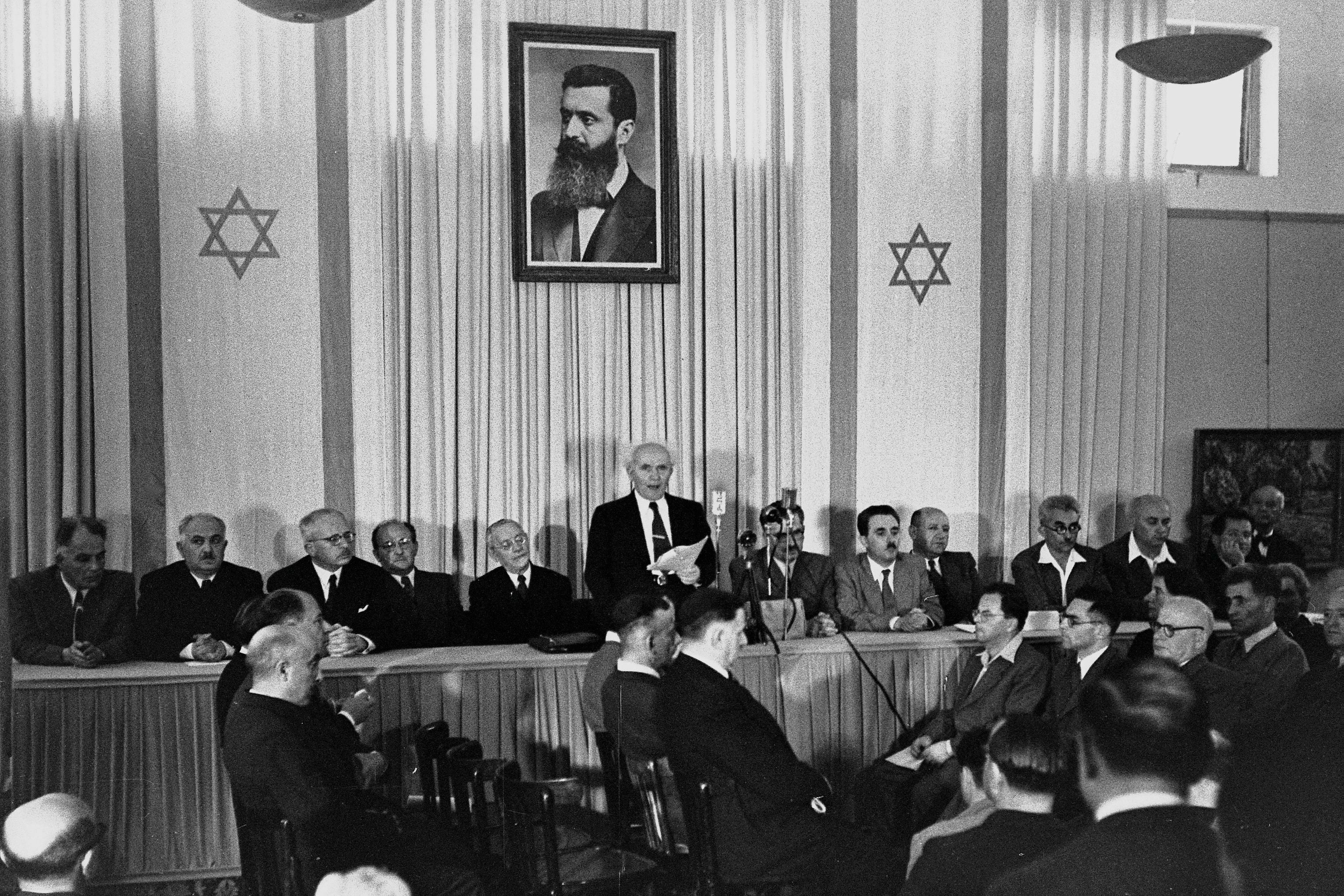
When Israel declared independence in 1948, many dispensationalists saw it as prophecy fulfilled before their eyes. The framework that had seemed speculative suddenly appeared vindicated by history.
The effect: "See, the Bible predicted this!" became a powerful argument. Events seemed to confirm the system, which gave it tremendous credibility.
The Six-Day War (1967)

When Israel captured Jerusalem, the West Bank, Gaza, and the Golan Heights in just six days, many Christians saw divine intervention. The idea of a miraculously protected Israel entered popular imagination.
The effect: Christian tourism to Israel exploded. Prophecy conferences multiplied. The alliance between American evangelicals and Israel grew much stronger.
Prophecy Books and Popular Culture
- 1970: Hal Lindsey's The Late Great Planet Earth becomes a bestseller. It brings dispensationalist ideas to mainstream audiences.
- 1995–2007: The Left Behind series sells over 80 million copies. It dramatizes the rapture and tribulation for popular consumption.
- Prophecy conferences, TV programs, and films continue to spread this view.
The result: By the late 20th century, many American evangelicals couldn't imagine reading the Bible any other way. The dispensationalist view had become invisible: simply "what the Bible teaches."
Sources and Further Reading
The claims on this page are well-documented in mainstream scholarship. For those who want to dig deeper:
On Dispensationalism's Origins
- The Roots of Fundamentalism: British and American Millenarianism, 1800-1930 by Ernest R. Sandeen: Academic history of the movement
- Dispensationalism by Charles Ryrie: A defense of dispensationalism by one of its leading proponents (useful for understanding the view from inside)
- The Origins of Dispensationalism by Clarence B. Bass: Critical historical analysis
On the Scofield Bible's Influence
- The Scofield Bible: Its History and Impact on Evangelical Christianity by R. Todd Mangum and Mark S. Sweetnam
- The Scofield Reference Bible was first published in 1909 by Oxford University Press and revised in 1917 and 1967
On Early Church and Reformation Interpretation
- Has the Church Replaced Israel? by Michael Vlach: Surveys both supersessionist and dispensationalist views
- The Israel of God by O. Palmer Robertson: Covenant theology perspective
- Primary sources: Augustine's City of God, Calvin's Institutes, and commentaries on Romans and Galatians
On Political Zionism
- The Jewish State by Theodor Herzl (1896): The founding document of political Zionism
- A History of Zionism by Walter Laqueur: Comprehensive academic history
Key Takeaway
The theological framework that obligates Christians to support a Jewish state is a recent development, less than 200 years old. For most of church history, Christians understood these passages differently.
This doesn't mean the newer view is automatically wrong. Historical novelty isn't proof of error.
But it should give us permission to ask questions. If Christians read the Bible faithfully for 1,800 years without arriving at these conclusions, perhaps this framework is less "obvious" than we've been taught. Perhaps there's room to examine Scripture afresh.
We're not inventing a new theology. We're exploring whether the ancient paths might have something to teach us.
"Stand at the crossroads and look; ask for the ancient paths, ask where the good way is, and walk in it."
Jeremiah 6:16